Stepping into the forest of my mind

Stepping into the forest of my mind
Just as every journey begins with a first step, every story begins with the first word.

Wednesday, December 9, 2015

Painting Holiday Wishes with Words

Adventures in Writing
This is the 2014 edition. I haven't
started the 2015 edition.
Words, a writer’s paintbrush.  Storytelling, essay writing, and poetry carry music and rhythm in the words.  Writers paint images and whole worlds with words.  Writers fill the senses with vivid smells, sharp textures.  Writers create life through characterization. The characters are real, feel emotion, endure drama, and some may even survive the story.  A writer is an artist.  

Embodying that artistry can be stressful, especially during the holiday season.  With all the concerts and cookie bakes, the parties and gift-buying, sometimes writers need to place their creative talent with words on hold until after the rush.    

Or do they?

Holiday cards.  I don’t know about you, but I still send them out.  Not everyone I know is online.  At least some of my relatives aren’t.  Yet they all know I’m writing.  Because of this self-inflicted artistry I placed upon myself, I feel obligated to produce an entertaining Lees Through the Year 2015 letter to accompany an original photo card with pithy or poetic wishes on it.  Relatives and friends I haven’t seen in a while look forward to these letters and cards each year.  They tell me so.  They thank me profusely when I send them. 
                                                                                  
Yet I fret over the letter, what to say, which events, which memories to include.  As a writer, I feel my talents judged by the receivers of these cards and letters, be they friends or relatives.  I don’t wish to sound boastful in the letters, simply entertaining.  I don’t want to bore; I want to infuse my words with laughter, with story.  The letter isn’t memoir it’s conversational, I remind myself.  No themes or pithy insight.  Yet I imagine the need to appear witty, to create memorable lines. 

I consider myself a writer even though I’ve sold only a handful of stories and essays.  The key word in that statement is sold.  I’ve written plenty for local free markets.  *Sigh*           

The holidays are a time to catch up with family and friends, tell stories, enjoy delicious homemade baked goods with tea, and linger over wine and cheese platters.  It’s a time to enjoy one another’s company.

            With all the list-making and gift-buying; the home decorating and meal planning; baking cookies and breads, pies and cakes, do you ever feel the added pressure of creativity with words at Christmastime?  Please let me know how you fit creativity into the holiday rush or if you worry about words because of your craft. 


Have a wonderful Christmas and holiday season! 

Monday, November 9, 2015

Framing the Memoir: How Does Motherhood Fit into the College Experience?

http://victoriamarielees.blogspot.com
Fall frames the world in color.
A writer friend asked me if my memoir was about how motherhood influenced me as a college student or was it how college influenced me as a mother.  While I realize that this is just one aspect of the memoir, it is a good question for it helps to frame the memoir. 

I think the memoir is more about how motherhood influenced me as a college student.  Yet the reverse can also be true.

            Let’s take the first part of the equation.  How did motherhood influence me as a college student? 

            Parenthood is a lifetime career.  It’s not something we stop doing once the children become adults—even if we wanted to.  At the time I started college, I was the primary care-giver to children in grades 2nd through 8th.  It was my job to help these children become successful in their education and any life obstacles they might encounter.  This was no easy task with my oldest daughter having learning and social problems.  I needed to be there for them. 

I took the parenting job seriously, maybe even obsessively.  I wasn’t free to think only of my own trials in education.  I had to be home for them in the beginning.  This is what made attending college so difficult in the early years of my ten-year journey.  After devoting my life to my children, I needed to allow time for college work.      

            Yet motherhood affected my college journey in other ways, too.  Because I was older, because I was a mother, sometimes I saw the wants and needs of my fellow students at the community college.  I would ask their questions in math class, study with them, help them with their essays.  My husband said that I had gained more children going to college, and perhaps he was correct.  I didn’t mind.  These young students helped me with technical difficulties and math or science concepts I hadn’t experienced recently in the basic skills classes I needed to supposedly bring me up to college entry.  My children were too young; hadn’t had this upper level education. 
           
            And because I was a more mature student, running her own home and family, I brought a commitment to my college education that a few of the younger students may have lacked at the community college level.  My fellow students permitted me to be the group leader in projects.

            Now because I was a mother, I brought home my newfound knowledge to my children, not that they always appreciated it, of course.  I took the notion of parents being the first teachers of their children seriously—again obsessively.  It was my job to be sure the children could survive in today’s world.  I also wanted them to be properly prepared for college as I was not.  I demonstrated time and again what professors were looking for in essays, what was necessary to study to do well on a college exam. 

            Wow!  When I look back on all this I can see why my family is glad that I graduated.  Hopefully the children will see my mothering skills as a good thing in their lives.  Only time will tell.

            What do you think?  Did I answer my friend’s question completely?  Do you have any questions for me about my journey as a mother of five attending college?         

Friday, October 9, 2015

Memoirs: More Than Just What Happened

Memoirs require depth and not merely what transpired during the slice of life being recounted through story.  The writer needs to look up from her reminiscing, and explain the wider experience and the meaning of it to the reader.

College wasn’t for me or my siblings.  We were not encouraged to attend college right out of high school.  There was no money for higher education in my house growing up.  We four children were told we had our education, and it was time to enter the workforce.  My siblings and I accepted it; we had no other choice.  Most of the children in my neighborhood did the same thing in the late 1970’s, especially the females.  My family didn’t know about community college, never went looking for it.  

Through light backstory, intermixed with feelings on this, I could expound upon what it felt like to be left by the roadside on the journey to a formal degree.  I always wondered what it would have been like to live on campus and study.  Of course at that time, I had no idea how extensive a college education was, how expensive.  It looked exciting to me because it was just outside my grasp.  College was for the wealthy, my family had always said. 

On a personal level, I looked for education wherever I could find it, wherever I could afford it.  The law office where I worked talked about sending one of the secretaries to paralegal training offered locally.  I jumped at the chance and told the office manager I would do it.  But then the lawyers decided against it.

To add depth to my memoir about going to college with five children in tow, I could research the history of my local community college or perhaps the birthing of community colleges in general; the two year colleges that possibly helped make higher education more affordable for the masses, and then add snippets of information--not in a solid block, but rather throughout my experiences.  In a later section of the book, I could compare the idea of local community colleges to the 300 plus year history of the University of Pennsylvania, an international university, an Ivy League, part of the ivory tower in education that I thought I could never reach.      


Let's take a look at a few of the memoirs I’ve been reading and see how well-known writers interpret their stories.  I find the writers connecting beyond their own experiences in order to make sense of the larger themes of belonging, of learning from those who struggled before them.  
http://victoriamarielees.blogspot.com


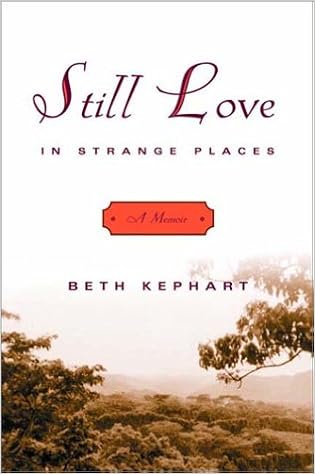
In Beth Kephart’s Still Love in Strange Places, Kephart describes the very land where her husband grew up and connects the volatility of the land to the political tensions of El Salvador.  The turmoil of the country mirrors Kephart’s trial to understand her husband’s culture, to feel a part of her husband’s culture. 


http://victoriamarielees.blogspot.com
In Colleen Carroll Campbell’s memoir My Sisters the Saints, Carroll Campbell connects her experiences grappling with her Catholic faith in the context of personal difficulty and tragedy with various saints down through the centuries, demonstrating that Carroll Campbell is not alone in her struggles.   


These thoughts dance across my dreams as I continue to read memoir and hammer away at my revisions.  Your thoughts are always welcome and greatly appreciated.    

Wednesday, September 9, 2015

Beginnings: As in Where to Begin My Memoir

            
http://victoriamarielees.blogspot.com
On a journey to a better
beginning for the memoir
Beginnings are the most important part of books, I feel, be it memoir or fiction.  Writers lose sleep over this. 

*Yawn*  [Excuse me.]

Writers need to pull readers into their stories.  Up till now, I’ve been starting my memoir with the decision to begin college.  With what my life was like before I started college. 

            I understand the in medias res concept, opening the story in the middle of the action.  I open chapter one of my memoir with a crucial scene from a YA short story I had published in Cricket Magazine, but I intersperse it with motherly duties to show my conflicting time:  writer/mother.  Then I [seem to] dump the reader into the reality of picking up the children from two different schools on a rainy day.  I allow the reader to interpret the children’s personalities through dialogue and interaction or offering one line quips that speak volumes about them.  Still, I can’t help but think this is a clumsy way to introduce my children to the reader.

            While I ask what I feel are probing questions about myself in an attempt to convince myself to sign up for courses at the local community college, I wonder if maybe my present first chapter should be a prologue instead, minus the opening writing scene, of course.  What have you found the purpose of prologues to be in books?  Reading memoir, my experience has shown that some memoirs have them and others don’t, and that these prologues tell of the essence of the book.    

            Chapter two starts with my toting the children along with me as I sign up for courses at the community college.  Perhaps I could show the children’s personalities there in that scene.  Maybe this is a better way to show in medias res, the actual beginning of my college journey.  Jump right into the journey instead of thinking about it.  Instead of showing what my life was like before I started college.


            Do you feel there is a need to show the pastoral setting of my life before the decision to attend college?  I do offer glimpses of my life with the family throughout the college journey as it affects my journey.  Thanks for any advice you may offer.

Sunday, August 9, 2015

The Voice in Memoir

http://victoriamarielees.blogspot.com
Be true to your voice in memoir
Restructuring the memoir is fine.  Works in progress go through many revisions.  The first draft is usually…ahem…vomit, anyway.  Okay, at least mine are.  And I need to remember not to compare my “drafts” with the finished, edited work of other writers. 

But as I redraft and restructure my memoir, I keep coming back to the same sticking point.  Every time I grab a new blank document and try to open the memoir pithily, enticingly, I lose my voice.  My memoir is not a philosophical tome.  It’s meant to offer advice and humor to parents contemplating lengthy endeavors, taking time away from the family.  How a parent can cope with this.  How they can succeed.  It’s meant to inspire and show others how to take courage and attempt something they may feel inadequate to accomplish.  And, of course, it is meant to entertain.

Humor helped me get through ten years of attending college part time while raising a family.  It simply has to be part of my memoir.

The thing about my writing style is my voice.  Whether I’m giving presentations or writing memoir, it’s the same.  It’s me.  If you’ve read any of my camping adventures on Camping with Kids you get the idea.  A few critique partners, professors, and writing facilitators noted that they enjoy my dry wit. 

In my memoir, I have the voice of innocence and the voice of understanding or experience.  Memoir needs these two voices.  The narrator must discover something from her journey through memory and share that information with the reader.  I must take the reader into the scenes of my struggles as a parent in college.  I can’t seem to move forward in my memoir any other way.  I can’t babble on in thought.  I’ve condensed scenes dramatically and left others bleeding on the floor and added much, in the first two chapters, by way of insight.  Perhaps this pass through revision will leave me feeling better prepared for beta readers. 


Oh, by the way, my short stories don’t share this humorous voice.  Not everyone, characters or people, can be me.  And this is probably a good thing.  Just ask my family.

Thursday, July 9, 2015

The Need for Universal Questions or Themes in Memoir

http://victoriamarielees.blogspot.com
Darlings everywhere!  Where's the meat?
The necessity to attend college brings to mind the universal questions through which to filter my story.  To build suspense, I need to show the search for the answers to these questions through my writing, my internal dialogue, in order to offer the reader insight into any journey he or she may be planning. 

Possible Themes
Making the right decision.  The idea of seemingly selfish ambitions of a mother at odds with the demands of motherhood. 
Taking the risk.  The tension between being a responsible wife and mother to 5 children and a college student. 
A sense of belonging.  Feelings of being an outsider at college.  It's not just the younger students who suffer from this.  Older students can feel they are starting behind the traditional college students because of a lack of college preparation. 

As my darlings lay, kicking and screaming on the library floor, I contemplate these questions and possibly redrafting my entire memoir.  No one ever said writing was easy.  And if they did, throw them on the floor with my kicking darlings.


Any insight you can offer, please do.  Thanks for reading.

Wednesday, June 24, 2015

Searching For That Need to Attend College

http://victoriamarielees.blogspot.com
Kelly Writers House, my favorite place to be
on the University of Pennsylvania's campus
Why did I attend college at the time in my memoir life?  A time when my twins, the youngest, started second grade.  A time when my learning disabled, oldest child needed me more than ever at the dawn of her high school years.  A time when all five of my young children needed me to be the calm, supportive mother they had always known.      

            This reason to go to college should be a necessity and not simply a desire one of my writing friends said.  And I believe she’s right.  But what can that necessity be?

            At the time I was considering college in my memoir, I was knee deep in motherhood.  But I also wanted to publish short stories in children’s magazines.  I wanted to establish a writing career. 

            [I know…who didn’t.]

            This was before social media and blogs.  Before the internet craze.  For me, it was before writers’ groups and organized courses outside the home.  My husband was sole provider of seven and travelled occasionally for business. 

I felt as if I were trapped in that home, sometimes, shackled to motherhood and unable to better myself through formal education.  I adored my children.  Still do.  They are, after all, my life.  My happiness.  I wouldn’t change a thing.  Really!

But after redoing the twins’ baby room with rejection notices—the paper kind, remember those?—I decided that education was key to publication.  At least I felt it would equal the playing field between me and published writers, established writers, the writers I was reading who talked of their college experience in articles they wrote in the baby’s and lady’s magazines I read.  I didn’t have this experience.  College was not an option when I graduated from high school in my blue collar neighborhood.  Only a select few went off to college.  I knew nothing about junior college or college loans.    

It took me seven years to get the courage to enroll in a community college, in classes that met regularly—outside of the home.  I had taken correspondence courses, again before the internet craze, in children’s literature.  These only whet my appetite for that renaissance understanding of the world.

            Little did I know how ill-prepared I was for college.  But that’s what the memoir is about.  My quest for knowledge and how I grappled with feelings of insecurity, feelings of selfishness leaving my family behind to become a college student and gain knowledge.  About finally becoming published.  About someone wanting to read my words.  About someone learning from my words.    


            You beautiful readers have been very kind to me, leaving notes on my blog.  Please offer any opinions as to whether you feel this may be that need to attend college I’m looking for or offer your precious guidance, so necessary to my writing life.  Thank you.